The cast iron griddle remains a cornerstone of professional and home kitchens worldwide, offering a level of heat retention and distribution that modern non-stick alternatives simply cannot replicate. Its enduring popularity stems from its sheer versatility, capable of transitioning from a high-heat searing tool to a slow-cooking surface with ease. Understanding the nuances of this tool is essential for anyone seeking to elevate their culinary results through superior thermal physics.
Across the globe, the resurgence of traditional cookware reflects a growing demand for sustainable, long-lasting products that avoid the chemical coatings found in disposable pans. A high-quality cast iron griddle is not just a purchase but an investment in a lifetime of cooking, often becoming a family heirloom passed down through generations. The ability to "season" the metal creates a natural, non-stick surface that improves with age, blending ancestral wisdom with modern gastronomic needs.
Whether you are operating a high-volume commercial breakfast diner or preparing a weekend brunch at home, the efficiency of a cast iron griddle ensures consistency across every pancake, egg, or burger. By mastering the relationship between heat mass and surface area, chefs can achieve the coveted Maillard reaction—the chemical reaction that gives browned food its distinctive flavor—more reliably than with any other flat-top surface.
Global Industry Context of Cast Iron Griddles
The global market for cast iron cookware has seen a significant pivot toward "heritage quality" in recent years. With the rise of health-conscious cooking and a rejection of PFAS-containing non-stick coatings, the cast iron griddle has moved from the periphery of rustic cooking back into the mainstream of urban kitchens. Industry data suggests a steady increase in demand for heavy-duty cookware that can withstand the rigors of both indoor gas ranges and outdoor campfires.
However, the industry faces the challenge of balancing traditional weight with modern ergonomics. Many consumers desire the thermal properties of cast iron but struggle with its heft. This has led to innovations in casting precision and the development of "lightweight" high-density alloys that maintain the heat-retention capabilities of a traditional cast iron griddle while reducing the strain on the user during handling and cleaning.
Defining the Modern Cast Iron Griddle
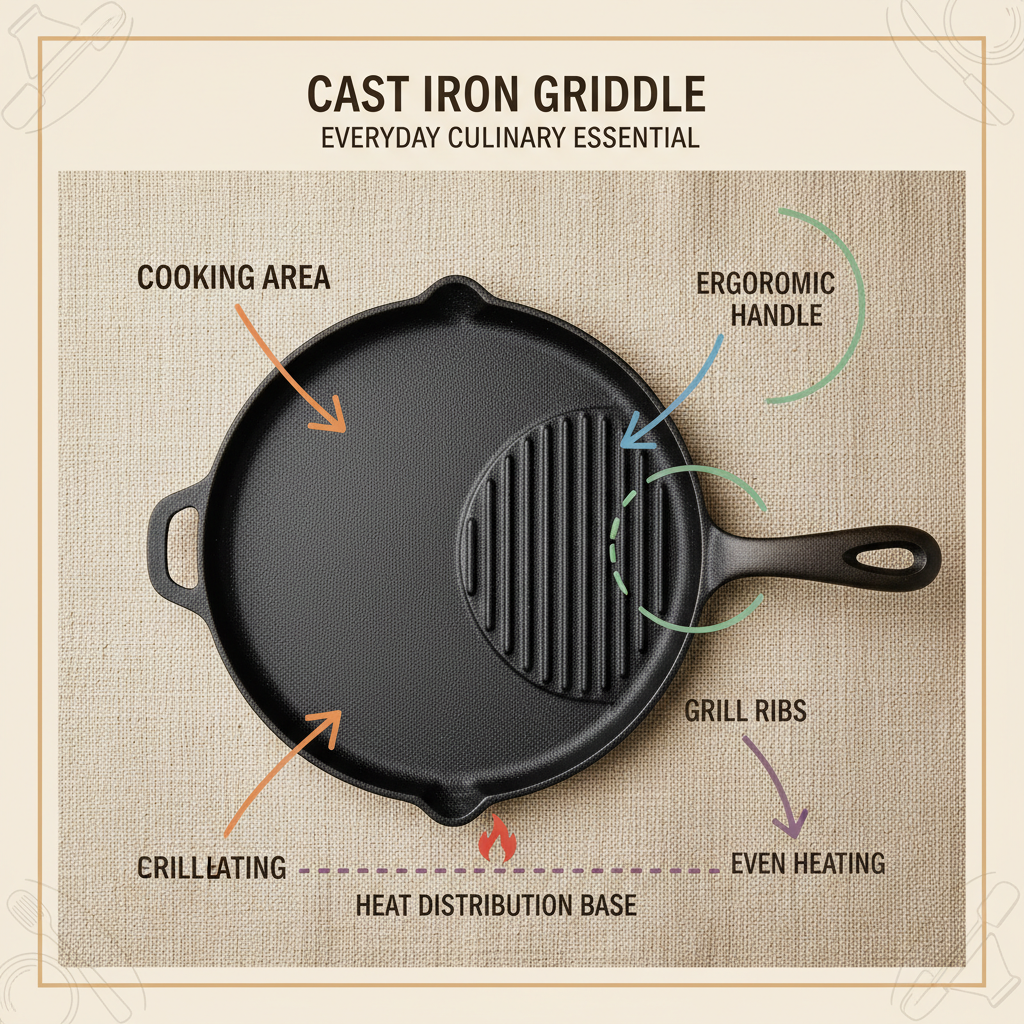
In simple terms, a cast iron griddle is a flat, heavy plate made from molten iron poured into a sand mold. Unlike a frying pan with high walls, the griddle's low profile maximizes surface area, making it the ideal tool for cooking multiple items simultaneously. Its primary function is to act as a thermal reservoir, absorbing vast amounts of energy and releasing it steadily into the food, preventing the temperature drops often seen with aluminum or stainless steel.
From an industrial perspective, the production of these tools connects ancient metallurgy with modern quality control. Today's griddles are often pre-seasoned using vegetable oil polymers that are baked into the iron at high temperatures. This creates a hydrophobic barrier that protects the metal from moisture and provides a naturally slick surface, bridging the gap between traditional ironware and the convenience expected by the modern consumer.
Beyond the kitchen, the concept of the cast iron griddle extends to humanitarian and remote industrial needs. In areas with inconsistent electricity or gas, the ability of a thick iron plate to maintain heat over a wood-fire or charcoal ember makes it a vital tool for food security and efficient calorie preparation in off-grid environments, proving that simple metallurgy can solve complex survival challenges.
Core Technical Components and Durability
The durability of a cast iron griddle is rooted in its carbon content. Cast iron typically contains 2% to 4% carbon, which lowers the melting point and allows the metal to flow easily into complex molds. This structure results in a dense, rugged material that is virtually impossible to warp, even when exposed to extreme temperature fluctuations, providing a stable cooking surface for decades.
Seasoning is the most critical chemical component of the cast iron griddle's performance. Through a process called polymerization, fats are heated past their smoke point, bonding to the iron molecules. This creates a hard, plastic-like layer that is both non-reactive and non-stick, effectively turning the tool into a self-healing surface that improves every time it is used.
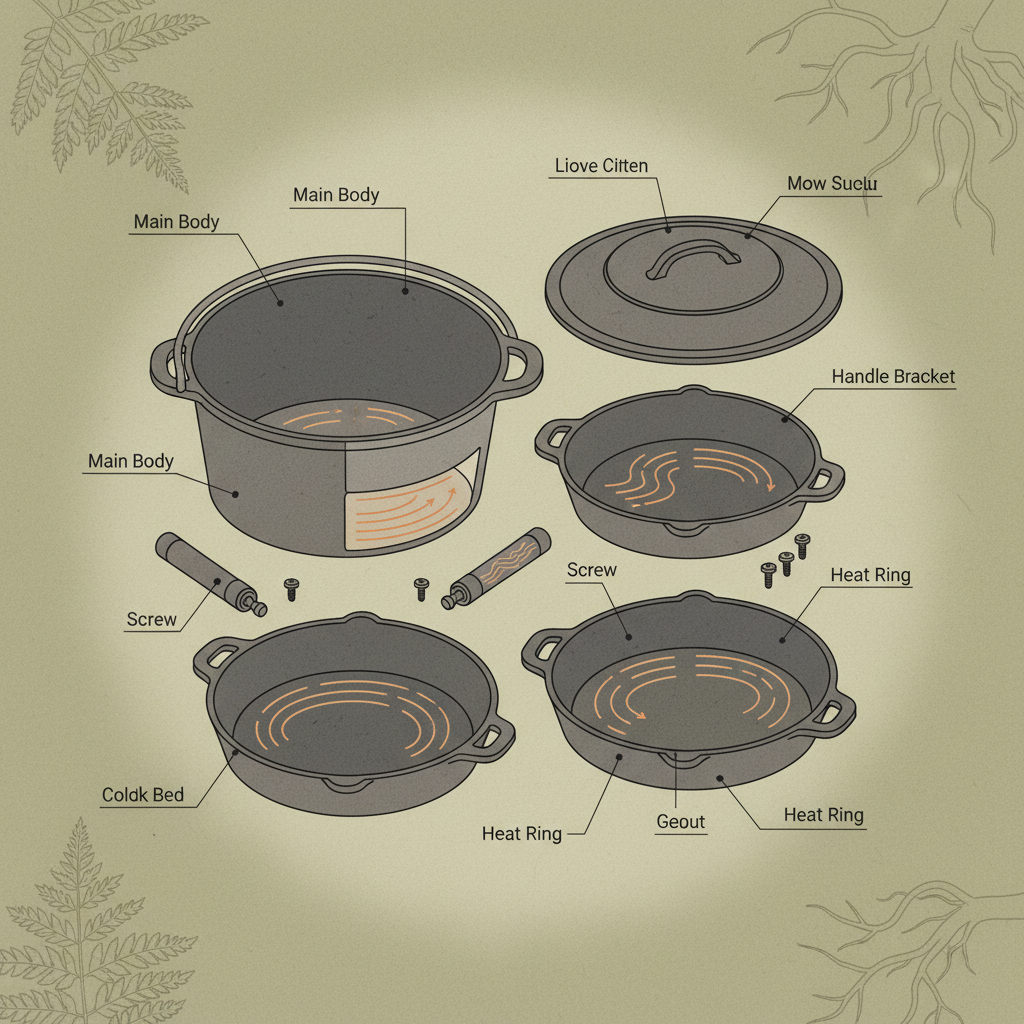
Scalability in production is achieved through advanced sand-casting techniques. By optimizing the cooling rate of the molten iron, manufacturers can control the grain size of the metal, reducing the likelihood of "hot spots" on the surface. This technical precision ensures that a professional-grade cast iron griddle provides uniform browning from the center to the edges.
Performance Metrics and Heat Efficiency
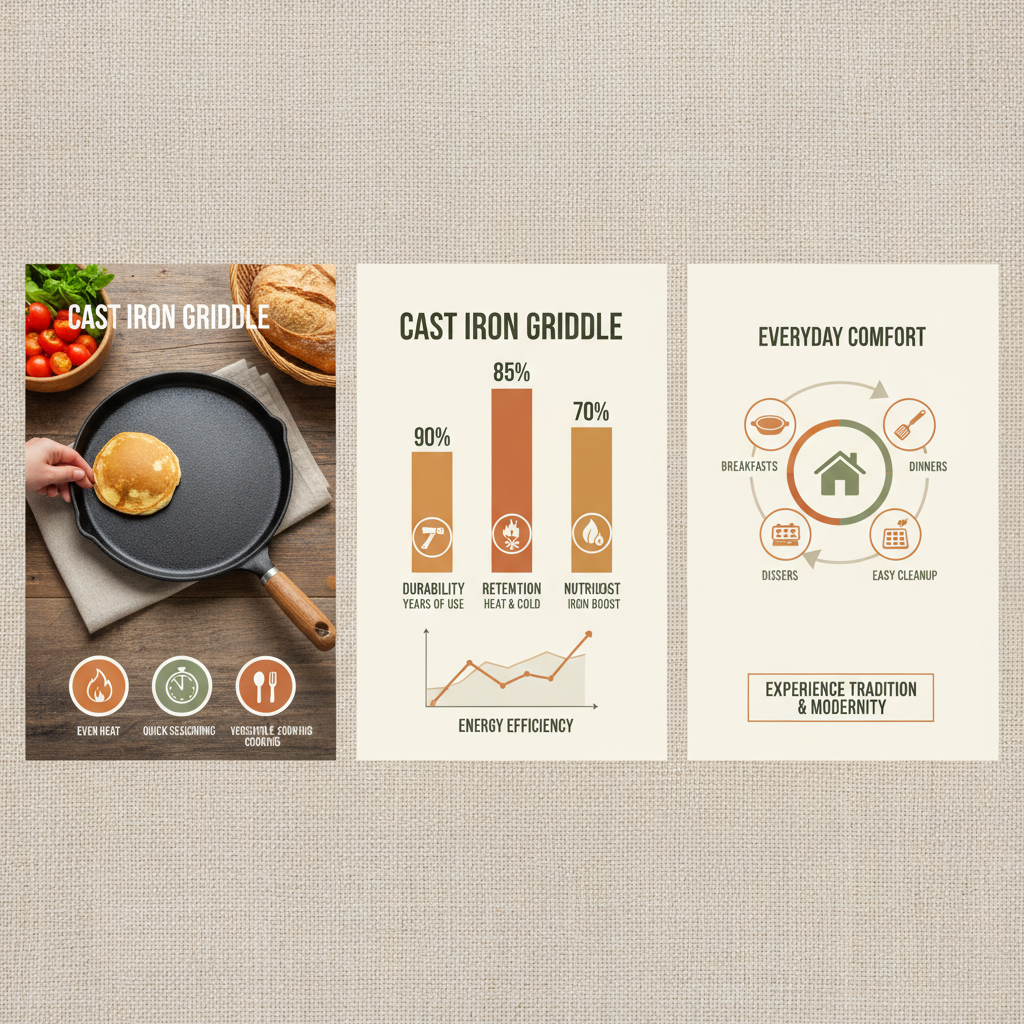
When comparing cookware, heat capacity is the primary metric. The cast iron griddle excels here because its mass allows it to store a significant amount of thermal energy. This means that when a cold piece of meat hits the surface, the temperature doesn't plummet, ensuring a perfect sear and locking in juices—a feat that lightweight pans cannot achieve.
Furthermore, the emissivity of cast iron allows it to radiate heat efficiently. This creates an oven-like effect on the surface of the griddle, cooking the food from both the contact point and the surrounding ambient heat. This dual-action heating accelerates cooking times for thick items like bacon or thick-cut vegetables.
Comparative Thermal Performance of Cast Iron Griddle Variants
Global Applications and Culinary Use Cases
In the United States and Canada, the cast iron griddle is indispensable for the "American Breakfast" culture, where large volumes of pancakes and eggs must be cooked simultaneously. The ability to maintain a steady 350°F across a large surface area allows chefs to manage timing perfectly, ensuring all components of a meal are hot at the same time.
In European markets, particularly in France and Italy, cast iron surfaces are often used for specialized regional dishes and outdoor grilling. The versatility of the griddle allows it to be used over an open flame or on a stovetop, making it a favorite for luxury camping (glamping) and rustic outdoor festivals where durability and heat performance are non-negotiable.
Long-Term Value and Sustainability
The most compelling argument for the cast iron griddle is its sustainability. In a world plagued by "planned obsolescence," cast iron is the antithesis. A well-maintained griddle does not wear out; it actually becomes more effective as the seasoning layer thickens. This eliminates the need to replace pans every few years, significantly reducing landfill waste.
From a cost-efficiency perspective, the price-per-use of a cast iron griddle is the lowest of any cookware category. While the initial investment may be higher than a cheap Teflon pan, the lifespan is measured in decades rather than months. This provides a logical and emotional sense of security, knowing that the tool will never fail during a critical meal.
Furthermore, the health impact is profound. By using a cast iron griddle, users avoid the risk of inhaling toxic fumes from overheating synthetic coatings. Additionally, cooking with iron can provide a small, natural supplement of dietary iron, contributing to overall wellbeing in a way that synthetic materials cannot.
Future Innovations in Iron Casting
The future of the cast iron griddle lies in the intersection of metallurgy and digital precision. We are seeing the emergence of 3D-printed sand molds, which allow for complex heat-channeling geometries within the iron itself. This could lead to griddles that distribute heat even more evenly or have integrated drip systems that are cast directly into the body of the tool.
Sustainability is also driving the shift toward "Green Iron." Foundries are beginning to experiment with hydrogen-powered smelting to reduce the carbon footprint of iron production. This ensures that the cast iron griddle remains an eco-friendly choice not just in its use, but in its very creation.
Automation in the seasoning process is another key trend. New plasma-spraying techniques allow manufacturers to apply a more durable, high-density initial seasoning layer that is more resistant to stripping, making the transition for beginners easier while maintaining the traditional benefits of the material.
Analysis of Cast Iron Griddle Material and Performance Variants
|
Griddle Variant
|
Thermal Retention
|
Maintenance Level
|
Life Expectancy
|
| Traditional Grey Iron |
Very High (10/10) |
High (Manual Seasoning) |
Lifetime+ |
| Pre-seasoned Modern |
High (9/10) |
Medium (Easy Care) |
Lifetime |
| Enameled Cast Iron |
Medium-High (7/10) |
Low (Dishwasher Safe) |
Long-term (Decades) |
| Lightweight Alloy |
Medium (6/10) |
Medium |
15-20 Years |
| Commercial Grade |
Maximum (10/10) |
High (Industrial) |
Lifetime+ |
| Carbon Steel Hybrid |
Medium-High (8/10) |
Medium (Fast Seasoning) |
20-30 Years |
FAQS
The key to preventing rust is maintaining a solid layer of seasoning and ensuring the griddle is completely dry after cleaning. Never let a cast iron griddle soak in water. After washing, dry it immediately with a towel and place it on a warm burner for a few minutes to evaporate any lingering moisture. Applying a very thin layer of cooking oil before storing it creates a protective barrier against oxygen and humidity.
Yes, you can use a small amount of mild dish soap. While old cooking myths suggest soap ruins the seasoning, modern soaps are not harsh enough to strip the chemically bonded polymer layer. However, avoid using abrasive steel wool or dishwasher tablets, as these can physically scrape away the seasoning. A soft brush and warm soapy water are perfectly safe for a well-seasoned griddle.
The best oils for seasoning are those with a high smoke point, such as grapeseed oil, flaxseed oil, or canola oil. These oils can withstand the high temperatures required to trigger polymerization without burning or becoming gummy. Avoid using extra-virgin olive oil or butter for the primary seasoning process, as their lower smoke points can lead to a sticky residue rather than a hard, slick surface.
Sticking usually happens for two reasons: insufficient seasoning or improper temperature control. If the seasoning is thin, the food bonds directly to the iron. If the griddle isn't hot enough, the food won't "sear" and release naturally. Ensure your griddle is preheated for at least 5-10 minutes, and if sticking persists, consider performing a full oven-seasoning cycle to reinforce the non-stick layer.
For high-heat applications, yes. While non-stick pans are convenient for low-heat eggs, they cannot handle searing temperatures and degrade over time. A cast iron griddle offers superior heat distribution, is safer (no chemical coatings), and lasts a lifetime. While it requires more maintenance, the culinary results—especially the crust and flavor—are vastly superior to those produced by synthetic coatings.
Absolutely. Cast iron is ferromagnetic, making it one of the best materials for induction cooking. Because induction heats the metal directly, a cast iron griddle reacts very quickly and efficiently. Just ensure the bottom of your griddle is relatively flat to maintain maximum contact with the induction surface for the most efficient energy transfer.
Conclusion
The cast iron griddle represents a perfect synergy between traditional metallurgy and modern culinary demands. By providing unmatched thermal stability, extreme durability, and an eco-friendly alternative to chemical coatings, it remains an essential tool for anyone serious about the art of cooking. From the technical precision of its casting to the chemical magic of its seasoning, every aspect of the griddle is designed for long-term performance and reliability.
As we move toward a more sustainable future, the value of investing in "buy-it-for-life" products becomes even more apparent. Embracing the use of a cast iron griddle is not just about achieving a better sear on a steak; it is about rejecting disposable culture in favor of quality and permanence. We encourage you to explore the possibilities of professional-grade ironware to transform your kitchen efficiency. Visit our website: www.foundryasia.com